
What to Do When You’ve Maxed Out Your ISA Allowance in the UK
Home /What to do when you've maxed out your ISA allowance in the UK
Maximising Tax-Efficient Investments: How ISAs and Physical Gold Can Fortify Your Portfolio
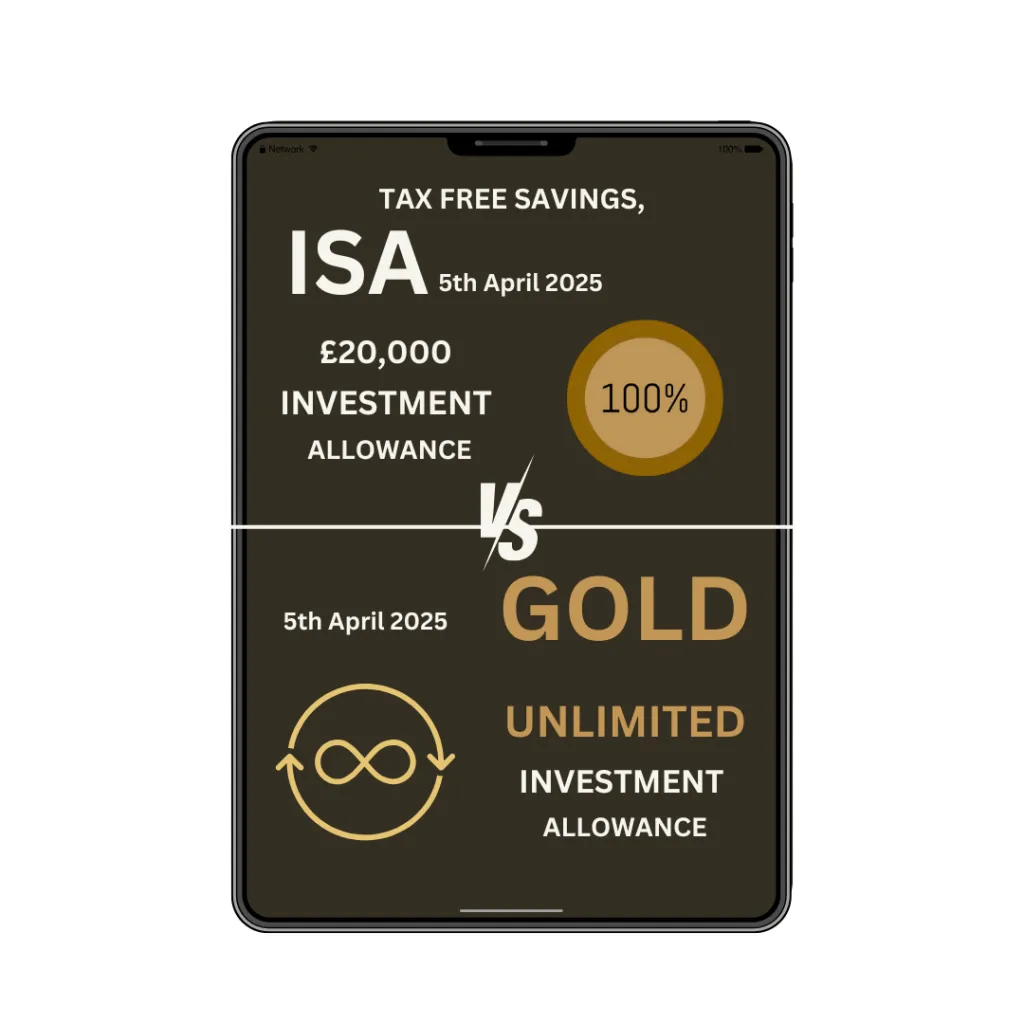
Individual Savings Accounts (ISAs) have solidified their place as one of the UK government’s most successful financial innovations. With approximately £725.9 billion held in adult ISA accounts, their popularity among savers is undeniable. Offering flexibility through cash, stocks and shares, or peer-to-peer lending options, ISAs cater to diverse risk appetites and growth objectives. Yet, their near-perfect design hits a hurdle: the annual £20,000 contribution limit.
For those seeking to extend their tax-efficient savings beyond this cap, physical gold emerges as a compelling alternative, combining historical resilience with modern-day growth potential.
Understanding ISA Options: Flexibility Meets Tax Efficiency
ISAs come in three primary forms, each tailored to distinct financial goals:
Cash ISAs: Function like traditional savings accounts, offering fixed or variable interest rates.
Stocks and Shares ISAs: Invest in equities, bonds, or funds, aligning returns with market performance.
Innovative Finance ISAs (IFISAs): Facilitate peer-to-peer lending, often yielding higher returns with increased risk.
The ability to blend these ISAs—allocating portions to cash for stability and equities for growth—creates a balanced, tax-free portfolio. However, once the £20,000 annual threshold is reached, investors must look elsewhere to continue growing savings tax-efficiently.
Physical Gold: A Timeless Tax-Efficient Complement
Gold’s appeal lies not only in its historical value but also in its unique tax treatment. Investment-grade gold coins minted by the Royal Mint, classified as UK legal tender, are exempt from Capital Gains Tax (CGT) upon sale—a privilege not extended to gold bars or foreign coins.
This exemption, rooted in the principle that currency transactions aren’t taxed, positions gold as a strategic asset for tax-conscious investors.
Performance That Speaks Volumes
While ISAs’ growth hinges on interest rates or market trends, gold has consistently delivered long-term appreciation.
Consider this 20-year comparison:
Cash ISA: £10,000 → £14,424
FTSE 100: £10,000 → £35,795
Gold: £10,000 → £70,710
Gold’s 25% surge in 2024 further underscores its ability to thrive amid market volatility.
With geopolitical shifts, such as evolving U.S. trade policies under Trump, driving uncertainty, institutions like Goldman Sachs advocate gold as a stabilizing force.
Liquidity, Costs, and Diversification: Gold’s Strategic Edge
Liquidity: Royal Mint coins, highly sought globally, can be swiftly liquidated, offering flexibility akin to easy-access ISAs.
Costs: Secure storage fees mirror those of actively managed ISAs, though home storage requires robust insurance.
Diversification: Gold’s inverse relationship to equities during crises (e.g., geopolitical conflicts or economic downturns) hedges against portfolio volatility, a feature ISAs alone can’t provide.
Building a Resilient Financial Future
Marrying ISAs with physical gold creates a robust, diversified strategy. ISAs lay the foundation for tax-free growth, while gold extends these benefits beyond annual limits, offering limitless potential and stability.
Ready to Explore Gold’s Role in Your Portfolio?
Secure your financial future with a complimentary consultation from The Bullion House expert brokers. Discover how to harness gold’s timeless value to complement your ISA investments and safeguard against market turbulence.
Why Gold Stands the Test of Time
Gold’s scarcity—only three Olympic pools could hold all mined gold—anchors its enduring value. A currency for millennia, its rarity and universal demand ensure it remains a cornerstone of wealth preservation.
In an unpredictable financial landscape, blending ISAs with physical gold isn’t just prudent—it’s a strategic imperative for long-term growth and security.
Begin with ISAs, then let gold elevate your tax-efficient savings to new heights.
Gold Investment Guide Sections:
Which is a better investment in 2025: ISA or Gold?
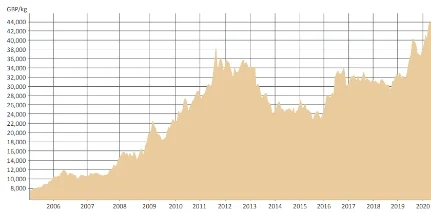
Both investments are great. However, with an ISA, your tax-free allowance is capped at £20,000 per year, whereas your gains in gold are unlimited.
What are the tax benefits of ISAs compared to gold?
- ISAs: Tax-free growth, no capital gains tax (CGT), and no income tax on withdrawals. However, there is a £20,000 annual contribution limit for the 2024/2025 tax year.
CGT applies unless you invest in CGT-exempt coins (e.g., Britannias, Sovereigns). When purchasing gold coins minted in the UK, any gains are tax-free.
How have ISAs performed compared to gold over the last 10 years?
- Stocks & Shares ISA: Average return of ~9-10% per year, growing significantly if dividends are reinvested.
- Gold: Has more than doubled in price over 10 years, driven by inflation concerns and central bank demand.
Should I invest in both an ISA and gold?
Yes! A balanced portfolio includes both:
- ISA for long-term, tax-free growth.
- Gold for stability and inflation protection.