Examples of inflation
Sunday Roast
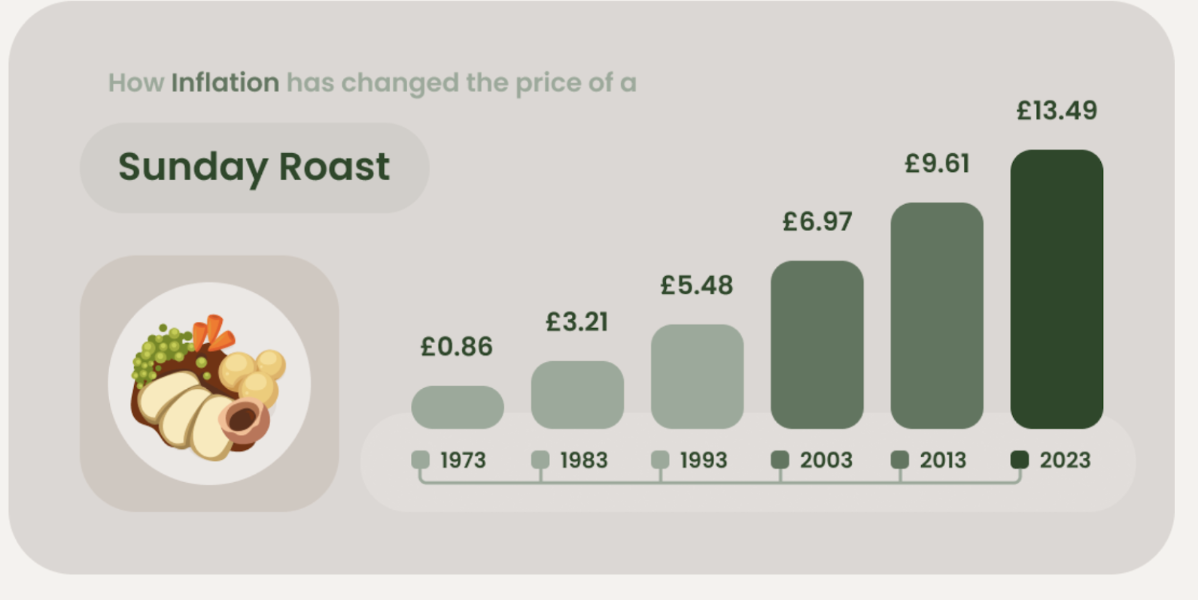
From Payset. 2013-2023 saw an increase of 40.37% in the price of a Sunday roast at Toby carvery.
A pint of beer

Some may remember when a beer cost us £1.60. Today, in London, the average pint now costs us £6.50. The average price of a pint in London has increased 63% according to Timeout.
Energy bills
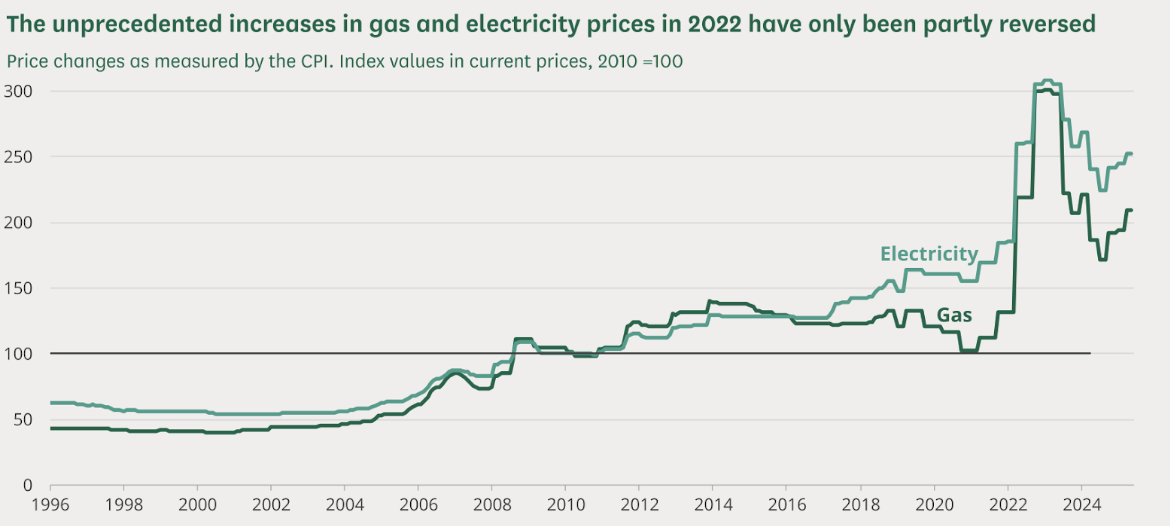
According to the House of Commons Library:
Average energy price in 2010: £450
Average energy price in 2021: £769
That’s a 70.8% increase.
Inflation is as real as the sun rising in the morning and as real as my tee-shot on the 1st hole going straight into the trees.
You don’t need me telling you how expensive things have gotten.
Why is high inflation bad?
Inflation makes us poorer everyday. As shown in the examples, £10 back in the day got you a lot more than £10 today. Inflation erodes the real value of money.
Want to know the worst part?
While prices and bills have been going up 40-60%, most of us certainly haven’t received a 40-60% increase in wages. Taxes have been getting higher and interest on cash saving accounts are hardly keeping up with inflation. This creates downward pressure on our wealth and makes us poorer in real terms in the future.
It’s important to note that governments love to celebrate lower inflation figures. This, however, does not mean things are getting cheaper, it just means things are getting more expensive at a slower pace.
What, then, can I do?
1. Don’t do nothing!
In the face of inflation, the worst you can do is to sit back and do nothing. The worst thing you can do is to accept your fate and have the mindset that this is just a fact of life.
Because this is not the case.
There is absolutely something you can do about it.
Gold is an asset that holds its value regardless of inflation. This is because the price of gold typically rises when inflation is high thus maintaining its value and more. Gold has become one of the most loved assets by central banks and investors because it is a safe haven asset that performs well over the long term and thrives in environments where uncertainty is rife. And boy is there a lot to be uncertain of (tariffs, Trump, MORE TAXES, inflation, etc)
Quick fact: In the past year gold is up 30%. Don’t believe me? Sound too good to be true? A quick google search will suffice.
Quick question: What are you currently receiving on your savings accounts? Are we beating inflation or is our wealth being chipped away day by day by inflation?
Quick action: Give Bullion House a call to see how you can access the best kept secret of the ultra rich and how the rich get richer.
2. Look for assets that yield higher than inflation returns
You might be thinking that this is a no-brainer. It might also sound easier said than done. If it was so easy, all of us would be retired by 30 and on a Greek Island with a cocktail in our hand and Oliver People’s sunglasses resting on the bridge of our noses.
But we can turn that dream into reality with one of the oldest, most trusted assets in the world.
Gold.
Julius Caesar paid in gold. Ancient kings and queens paid in gold. Thousands of years later? The value of gold remains. Not only does it remain, but the value strengthens in the face of fiat currencies, which are easily printed by governments who wish to pursue high fiscal deficits (cough, cough, the US).
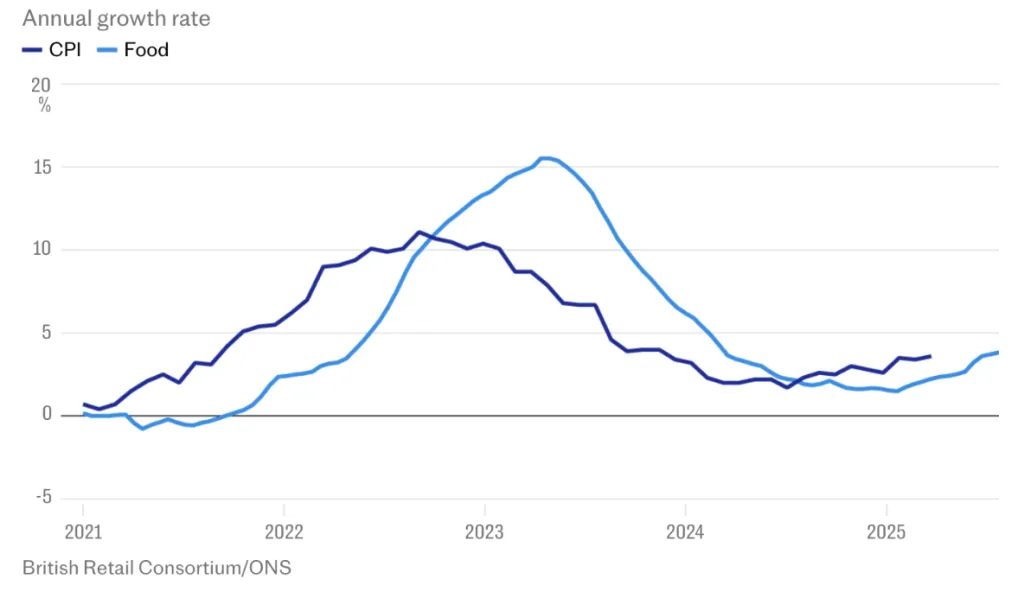
I said that gold is up 30% in the past year alone. The latest inflation figures in June were 3.6%. Contrary to popular belief, my limited maths skills tell me that gold has yielded above inflation returns.
For reference, even the best performing stock market indexes are at 10%.
3. Make your money work for you, not against you
We have addressed how the value of money decreases as bare essentials and cultural cuisines have been increasing in price.
To protect against this, does not mean to spend less. Spending less is an ineffective short term “solution” (it’s not actually a solution at all) to the problem. One has to be willing to strategically and efficiently deploy their capital in assets that protect, secure, and grow your wealth.
Such assets could be gold, could be collectibles, and of course could be riskier public markets.
Every second we don’t put our money to work, it is working against us.