In a nutshell, it is to do with the value and intrinsic worth of cryptocurrencies. FTX had leveraged its own cryptocurrency FTT to perform buyouts and to fuel growth. But then herein lies the problem with these cryptocurrencies. It is only worth something if everyone in the room agrees it is worth that much.
It is the equivalent of putting a cardboard box in the garden of Bill Gates’ house, going to the bank and telling them you live in a multimillion dollar house, borrowing money using the house as leverage, and then starting your own business as a bank so that people make deposits with you.
What then happens when people realise you don’t have any assets on your balance sheet? Bill Gates’ house isn’t yours and your cardboard box can’t cover the loan from the bank or reimburse the depositors in your fraudulent bank.
This is essentially what FTX did. FTX had a separate company, Alameda Research, that had listed FTT (FTX’s own cryptocurrency) as assets on its balance sheet.
Alameda Research was then lending out money that it had essentially printed via FTX’s currency. The problem is that they are not a central bank so this imaginary money is, you guessed it, worthless.
Insolvency rumours spread like wildfire. Therefore, when people no longer think their money is safe, similar to the 2008 financial crisis when people were queuing outside banks to withdraw money, a bank run occurs. Lots and lots of people had tried withdrawing their money from FTX, they had to eventually stop withdrawals to prevent immediate bankruptcy.
Users of FTX were putting in money to exchange cryptocurrencies, not giving Sam free reign to spend it as he pleased. Billions of dollars were lost.
Sam arrested in the Bahamas

This then sparked a domino effect where everything quickly collapsed within days. Not years, months, or weeks but days.

On the brink of its collapse, FTX was nearly bailed out by another crypto platform Binance. But it took Binance 24 hours of “corporate due diligence” to declare it would no longer bail out Sam Bankman-Fried’s company. If this reeks of unethical, risky, and dangerous, it’s because it is.
Strategy: What is the strategy?
Strategy, formerly known as MicroStrategy, runs a rather interesting business model. Long story short, the company issues bonds, and with the money it borrows, it buys bitcoin. Because the company buys so much of it, the price of bitcoin goes up. And because he is issuing bonds against the value of bitcoin, as the value increases he can issue more bonds, at zero per cent, to repeat the cycle once again. Some call it an infinite money glitch. Hmm.
Company co-founder Michael Saylor himself calls it “financial engineering” in an interview. Michael Saylor himself is also quite an odd-ball (takes one to know one). He is known for bathing in the volatility of bitcoin and posting ridiculous AI photos of himself on X (twitter).
Here’s a few:

“Don’t miss the ₿ train” from X

https://x.com/saylor/status/1895325810942411234

“Every Empire needs bitcoin” from X
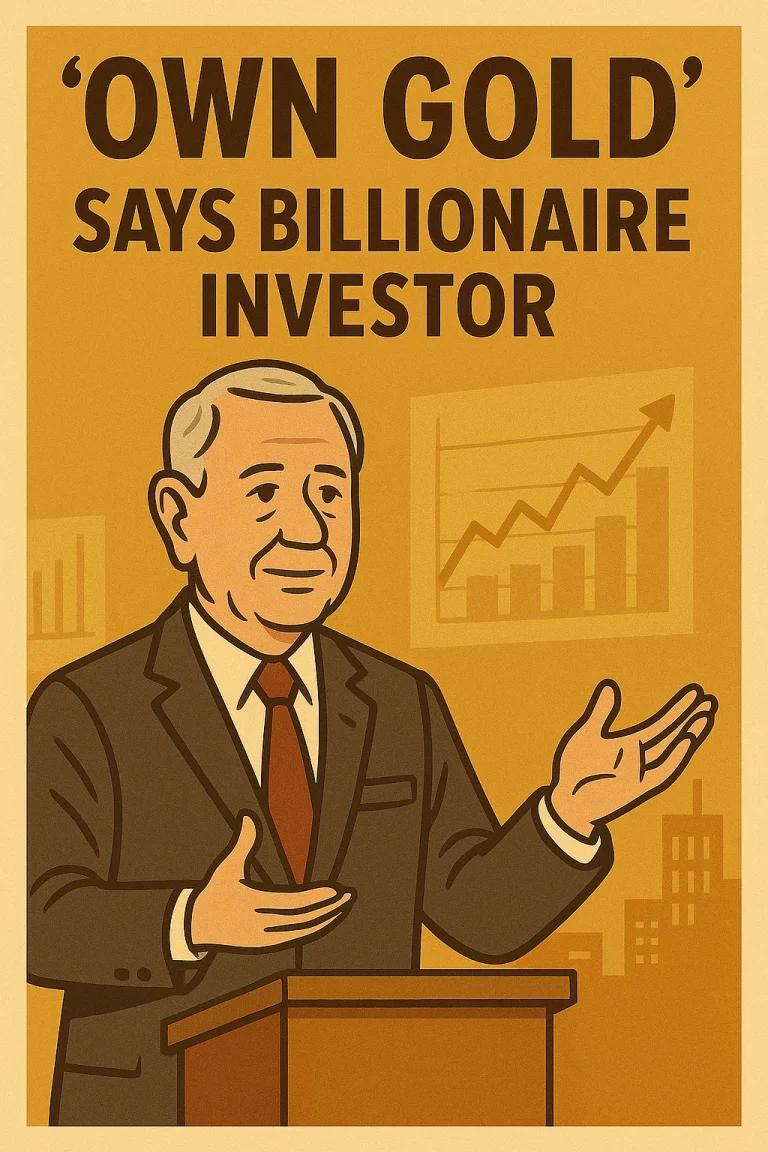
In light of this, I thought I’d do my own:

It’s so silly. I regret doing it already.
Strategy currently holds around 580,000 bitcoin. That’s around $61bn worth of assets on its balance sheet. Michael Saylor believes in what he does. He is known to never sell bitcoin and to only buy more regardless of the price. In a sense, it is similar to what we do at Bullion House where we believe in what we do. We believe in gold and its intrinsic value so much so, that it is reflective in our buy-back policy and the fact we don’t hedge our products. We assure gold holders of their liquidity with this policy but we don’t really care if the price of gold drops after the buy back because we believe in gold as an asset. Nor do we hedge the gold price (betting that the gold price will drop) because we believe in the value of British gold coins.
But that’s about as far as the comparison goes.
Warning: Super technical paragraphs coming up feel free to skip
Okay, so we know the rough idea of Strategy’s strategy but where is the devil in the detail in this “financial engineering”.
I mentioned that Strategy issue bonds, but they are in fact convertible bonds. This means that the investor would lend the company money but then have the option to convert this debt into shares at an agreed price. This allows Strategy to borrow money at zero interest because the arbitrage made from the debt to the high share price (provided bitcoin goes up) is good enough for investors.
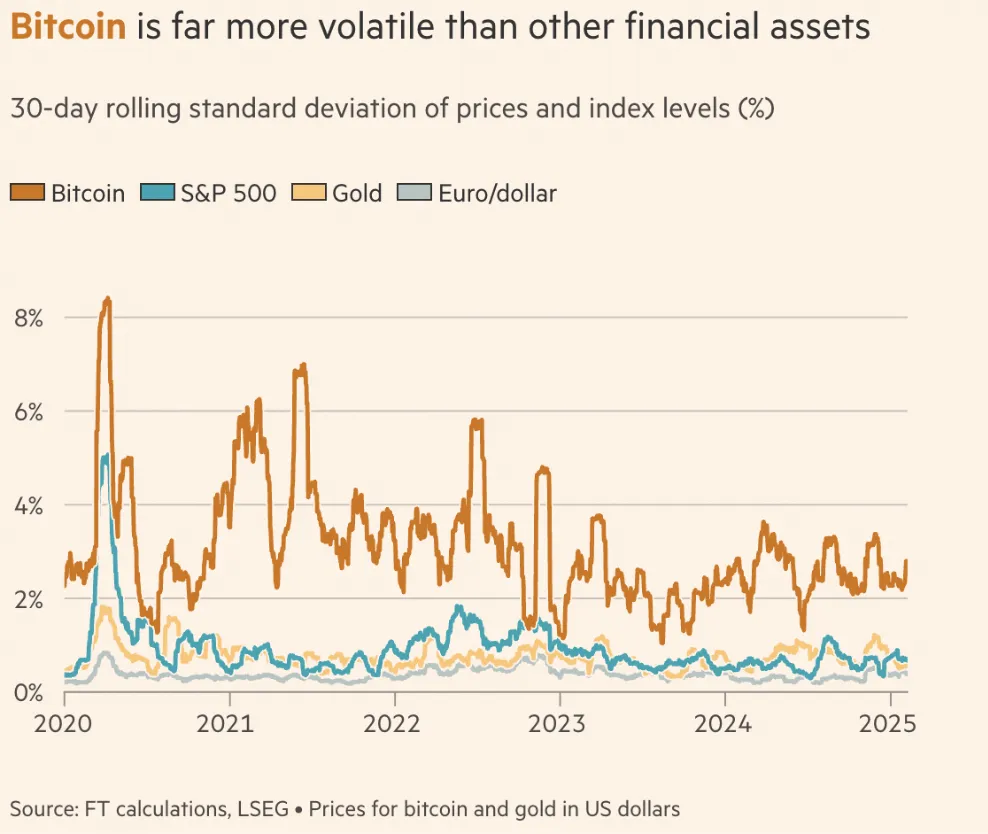
Another reason for the virtually zero interest rate bonds is to do with the volatility of bitcoin. Let’s say Strategy’s stock trades at $400. It would issue a convertible bond that has a call option of a 50 per cent conversion premium on its share price now worth $600. The share price almost always goes up because when Strategy does a fund raising round, people know that the money will go to buying more bitcoin, thereby increasing the price of bitcoin, increasing the company’s value. It can do this because the whole business model is driven by the volatility in bitcoin.
That is why Michael Saylor will post strange things on X, that is why he will come out to crypto events and news platforms to tell you to buy it because it means the next fundraising round he has, he can borrow at zero per cent interest. Of course he’ll tell you that you’re missing out on the next big thing because his very company depends on it.
There is a scene in the Pirates of the Caribbean movies where Lord Cutler Beckett tells Keira Knightly’s character that “loyalty is no longer the currency of the realm… I’m afraid currency is the currency of the realm”. For Michael Saylor, volatility is the currency of the realm.
What are the lessons learned from this?
From FTX to Strategy, the whole thing just smells fishy.
You may think that just because institutional investors like venture capitalists, hedge funds, or investment firms like Blackrock, people who are allegedly smarter than you and I, are involved in crypto must mean it is safe. It does not. Sequoia Capital, an American Venture Capital firm, praised Sam Bankman-Fried for his genius! Which, in a way it was, but also incredibly illegal and unethical. Big firms with large amounts of money can afford to take high risk, high return ventures into crypto because they’re richer, bigger and have many other assets to protect them from the shortfall. Most retail investors don’t. Never assume they’ve done the due diligence.
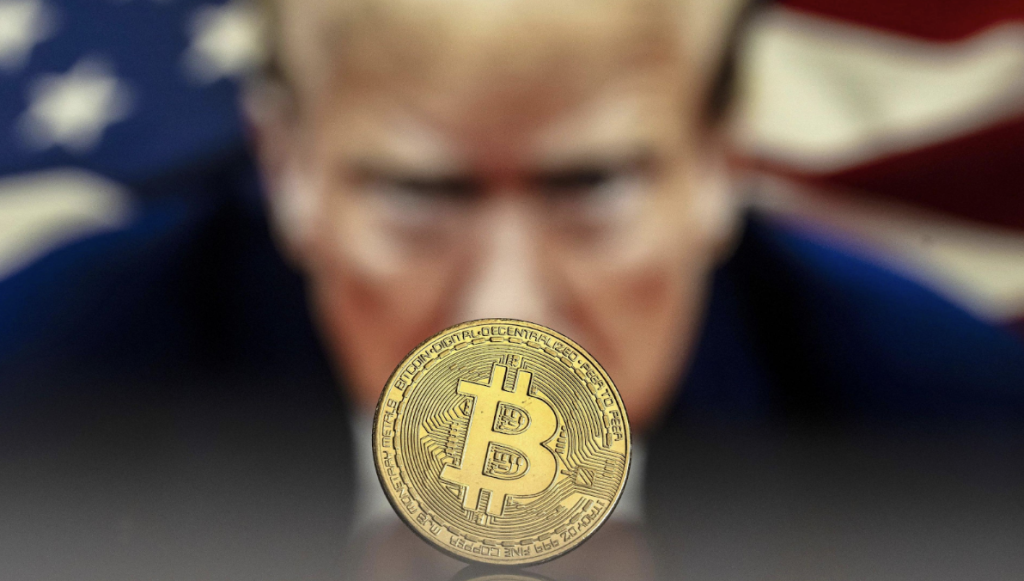
There is a real moral hazard here too. Trump has already accepted a $400mn jet from Qatar and with the release of his own memecoin, any country that does not have fiscal regulation (such as the Qataris, Russia, etc.) can simply purchase Trump’s cryptocurrency, thereby making him richer, to essentially bribe him. There is a real crisis of trust in this administration and we have seen that with investors selling off dollar assets and moving it into safer assets, such as gold and EU markets, and he has ripped up international trade treaties to impose his own tariffs on April 2nd. So having looked at the two case studies, do we still think it’s a good idea for the President of the United States to be issuing his own cryptocurrency, his own company raising billions to purchase more, and passing pro-crypto legislation with obvious winners in the White House?
Where was regulation during the FTX fraud case and where is regulation now? Well, quite frankly, it’s hard to regulate and audit crypto companies. It is because no one really knows how to accurately measure the value of these things. In the case of FTX, audit firms were afraid to commit their name to its auditing and that turned out to be a good decision. Given how volatile bitcoin is, what will happen to Strategy when the bitcoin price drops dramatically? There are billions of dollars of investors’ money involved in Strategy so if the self-perpetuating loop collapses, let’s just say it won’t be pretty.
If you want to be trusted by governments and central banks you must prove your worth and its store of value. Gold has proven itself in this regard. The human race has transacted in gold for centuries. Today, people and central banks buy gold to protect against devaluing currencies, global uncertainty and dollar sanctions because it is actually worth something.
Bitcoin as a strategic reserve is being lobbied by bitcoin holders but to what extent is this a serious possibility? I’ll put my neck on the line here and say it’s not a great idea. What is the purpose of a reserve? It is something you can rely on in a crisis or in times of need. There are gold reserves and there are oil reserves. But a bitcoin reserve? What if the US government wants to use bitcoin but in times of a crisis it’s worth nothing? So volatility is a concern here. The other issue is the notion of anonymity. Bitcoin prides itself as a “currency” that is impossible to trace back to its owner and as an alternative to the traditional financial system. These two traits are a criminal’s dream. Last year, the National Crime Agency were given the legal powers to “seize, freeze and destroy crypto assets used by criminals”. The NCA estimate that there were roughly £1.2bn of illicit crypto transactions linked to the UK in 2021. So you can imagine a country with morals will be unlikely to purchase anonymous cryptocurrencies potentially enriching arms dealers, drug cartels, and other criminals who wanted to bypass the traditional financial system. Thirdly, bitcoin is typically seen as an investment. People buy it because they think it will be worth more in the future. So then, what kind of currency is it if people are unwilling to part ways with their coins if it will be worth more? There is a strict supply of the stuff too. Only 21mn bitcoins will ever exist. Finally, if the whole point of cryptocurrencies was to be independent of the financial system, why do they want to be backed up by them?
It is comical that people use the words “park”, “money”, “crypto” in the same sentence. Perhaps it’s more like having your foot on the brake on an uphill slope.
You may be tempted to ride the wave because owners of crypto tell you it’s the next big thing, thereby inflating the value of their assets, but ultimately, if you don’t get it, don’t buy it. And I sure as hell don’t get it.